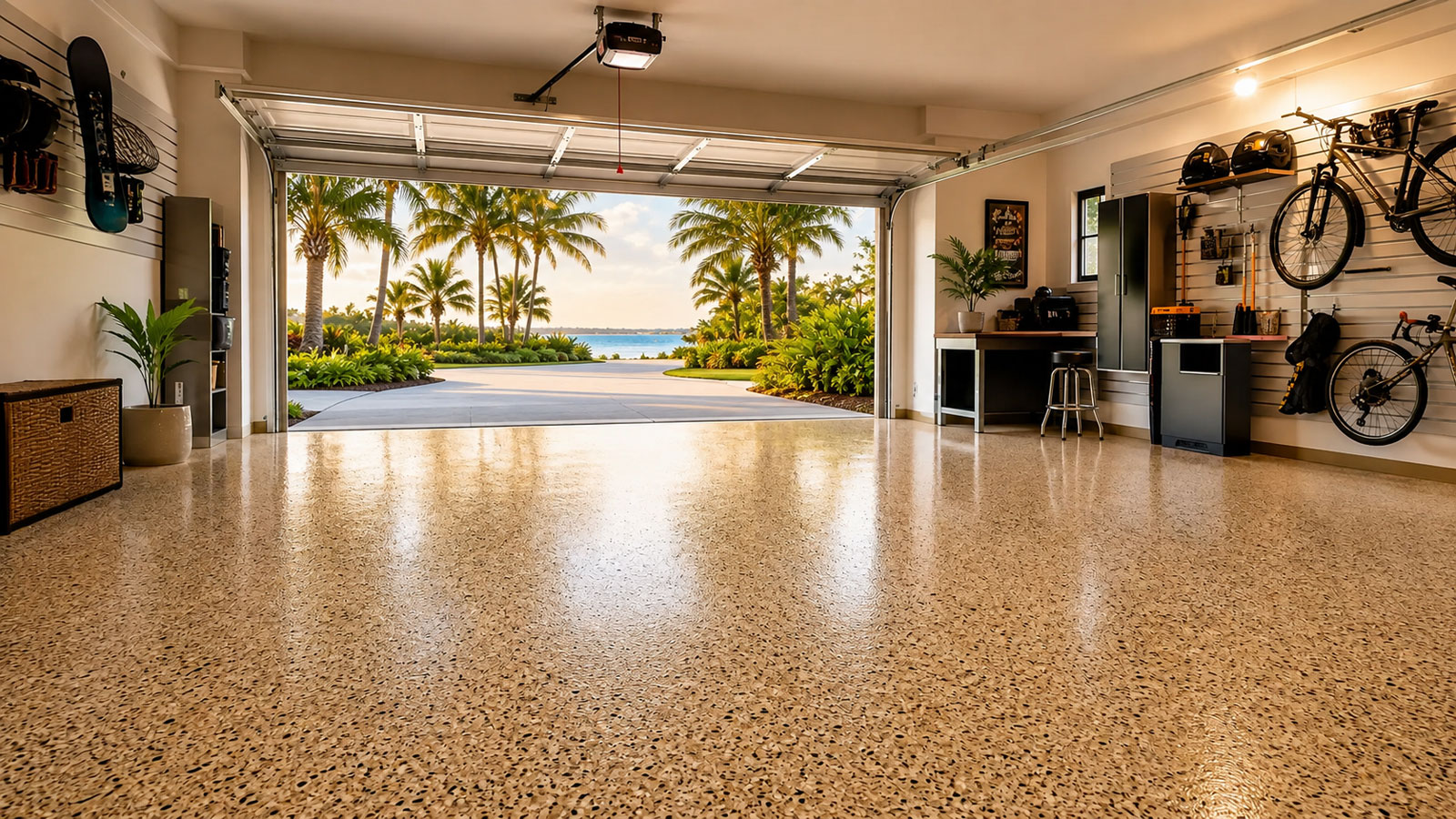
Caring for Your Garage Floor Coating
Simple care steps for keeping a professionally coated garage floor clean, protected, and ready for everyday use.
The Good News: It’s Easy
A professionally coated floor creates a protective surface that is easier to sweep, mop, and maintain than bare concrete. The basic principle is simple: remove grit regularly and clean spills promptly.
For most homes, water, a mild detergent, and a soft mop or brush are enough. Avoid harsh or abrasive cleaning methods that can dull the finish.
Routine Maintenance Tasks
Sweep or dust mop
Remove loose dirt, pollen, sand, soil, leaves, and grit with a soft-bristle broom or microfiber dust mop so abrasive particles are not ground into the surface.
Damp mop with mild cleaner
For a deeper clean, mop with warm water and a mild floor cleaner. Avoid harsh chemicals, acidic cleaners, bleach, ammonia, wire brushes, and abrasive pads.
Clean up spills
Wipe up oil, gasoline, brake fluid, and other automotive or household spills as soon as practical. Long exposure to harsh substances can affect the finish.
Rinse away tracked-in debris
After heavy rain, beach or yard activity, remove wet tire marks, sand, soil, and grit. Regular wash-downs with mild cleaner can help keep the surface easier to maintain.
Check for chips or wear
Look for chips, scratches, dull areas, or unusual wear. Minor issues are often easier to address when noticed early.
What to Avoid
A professionally coated garage floor is durable, but harsh chemicals, abrasive tools, and prolonged exposure to certain materials can dull or damage the finish.
Wellington Area Considerations
South Florida conditions create a few useful maintenance and planning considerations for long-term coating performance.
Heat and UV Exposure
Wellington and the West Palm Beach metro area experience high heat and strong UV exposure. Garages with direct sunlight can benefit from a system and topcoat chosen with UV stability in mind.
Humidity, Rainfall, and Slab Moisture
High humidity and frequent warm-season rainfall make moisture awareness useful during both installation and maintenance. If moisture appears to be coming through the slab or a coating shows unusual changes, a professional can evaluate the floor.
Pollen, Sand, and Soil Tracking
Pollen, sand, soil, and wet vehicle tires are practical local maintenance concerns. Routine sweeping and a mild wash-down help prevent grit from lingering on the surface.
Coastal Salt Is Location-Specific
For coastal properties such as Palm Beach or Riviera Beach, salt exposure may be a relevant maintenance topic. It should not be treated as a general condition for inland Wellington garages.
Recommended Cleaning Approach
Related Guides
Questions About Your Garage Floor?
Call to talk through maintenance, repairs, recoating options, or next steps for your garage floor.